红外与激光工程3大核心收录附英文摘要写作规范
时间: 分类:技巧指导 浏览次数:
今天在这里分享红外与激光工程英文摘要写作规范,这是一本3大核心收录的刊物,是综合性科技期刊,主要征收国内光学、光电子及交叉学科的学术论文与工程研究报告,集中反映了我国光学工程及光电技术在航空、航天等国防工业,以及国民经济各个领域的工程应用水平。
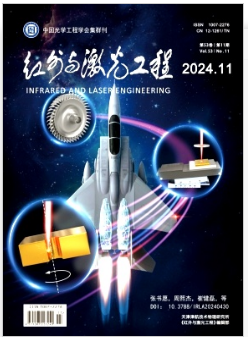
红外与激光工程征稿方向/栏目信息如下:
红外技术及应用,激光器与激光光学,光电测量,光学设计,光学制造,光学器件,材料与薄膜,全息,光学成像技术,光通信与光传感,光谱学,物理光学,非线性光学,超快光学,微纳光学,生物光学,量子光学,集成光学,表面光学,大气光学,海洋光学,空间光学等。
《红外与激光工程》“英文长摘要”格式要求——综述
一、篇幅:
英文长摘要篇幅要求在 600~800 字(单词数),须用第三人称撰写。
二、结构:
(1)题目、作者和单位(中英文信息须对应)
(2)英文长摘要正文(英文摘要中切忌使用“In this paper……”等)
1)研究意义(Significance)(突出本领域研究的重要性)
2)研究进展(Progress)(本领域的重要研究进展):请标示出所对应的正
文中的图表,以括号标注,如 (Fig.3)、(Tab.2) 等
3)结论与展望(Conclusions and Prospects)
(3)关键词(Key words)
三、不引用参考文献、数学公式和化学式,如果有引用其他文章,建议转述。
四、不得简单重复引言和结论。如有缩写,需给出全称。
五、“英文长摘要”请放在文末。
《红外与激光工程》“英文长摘要”格式要求——研究论文
一、篇幅:
英文长摘要篇幅要求在 600~800 字(单词数),须用第三人称撰写。
二、结构:
(1)题目、作者和单位(中英文信息须对应)
(2)英文长摘要正文(英文摘要中切忌使用“In this paper……”等)
1)研究目的(Objective)(突出所做工作的重要性和必要性)
2)研究方法(Methods)
3)创新性结果(Results and Discussions): 请标示出所对应的正文中的图
表,以括号标注,如 (Fig.3)、(Tab.2) 等
4)结论(Conclusions)
(3)关键词(Key words)
三、不引用参考文献、数学公式和化学式,如果有引用其他文章,建议转述。
四、不得简单重复引言和结论。如有缩写,需给出全称。
五、“英文长摘要”请放在文末。
《红外与激光工程》“英文长摘要”格式要求——快报
一、篇幅:
英文长摘要篇幅要求在 300~400 字(单词数),须用第三人称撰写。
二、结构:
(1)题目、作者和单位(中英文信息须对应)
(2)英文长摘要正文(英文摘要中切忌使用“In this paper……”等)
1)研究目的(Objective)(突出所做工作的重要性和必要性)
2)研究方法(Methods)
3)创新性结果(Results and Discussions): 请标示出所对应的正文中的图
表,以括号标注,如 (Fig.3)、(Tab.2) 等
4)结论(Conclusions)
(3)关键词(Key words)
三、不引用参考文献、数学公式和化学式,如果有引用其他文章,建议转述。
四、不得简单重复引言和结论。如有缩写,需给出全称。
五、“英文长摘要”请放在文末。 英文长摘要模板见后
科研论文英文长摘要模板
Design of portable infrared target simulator system
Gao Hongwei1
,Yang Zhongming
2*
,Liu Hongbo
3
, Zhuang Xingang
3
,Liu
Zhaojun
2
1 Key Laboratory of Laser and Infrared System, Shandong University, Qingdao 266237, China;
2 School of Information Science and Engineering, Shandong University, Qingdao
266237, China;
3 The 41st Institute of China Electronics Technology Group Corporation, Qingdao
266555, China
Abstract
Objective Infrared target simulator is an important part of infrared target
simulation experiment. When the outgoing pupil of the collimation system
coincides with the incident pupil of the detection equipment, it can provide a
stable infinitely far simulated target for infrared detection equipment, and the
simulation results have the advantages of being accurate, controllable and
repeatable experiments, which are used to evaluate the performance and accuracy
of infrared detection equipment. There are important applications in radar test, infrared guidance, infrared tracking, etc. With the development of photoelectric
detection equipment sensor integration and miniaturization, multi-band sensors
have become the standard configuration of most photoelectric detection
equipment. Due to changes in the debugging environment and the use of the
environment, it is necessary to adjust it frequently, but most of the target
simulators in the laboratory are only equipped with a single-band light source, large size is not convenient to carry. Therefore, it is necessary to establish
multi-band and small-sized portable target simulators to meet the needs of
different usage environments. For this purpose, an off-axis reflective infrared
target simulator system is designed in this paper. Methods A portable infrared target simulation system is built in this paper. A 110
mm aperture parallel light tube of reflective structure is chosen as the collimation
system (Fig.2). The optical-mechanical thermal integration analysis of the system
is performed to determine the deformation variation of the primary and secondary
mirrors and mechanical structure caused by temperature difference (Fig.8). The
self-collimating interferometric detection method is mounted using a Zygo
interferometer (Fig.11), and the mounting results are judged by the PV and RMS
value results of the face shape measurement of the standard plane mirror (Fig.13). Results and Discussions The portable infrared target simulation system is
mounted using self-collimating interferometry, with PV value of 0.356λ and RMS
value of 0.047λ (Fig.13), which is better than λ/20, and the results are excellent
and meet the usage requirements. The results of Zernike coefficient analysis show
that the system aberrations are mainly out-of-focus, tilt and higher order
aberrations of more than 5 levels (Tab.5), and the adjustable target disc is
designed to compensate and improve the imaging quality. A portable infrared
target simulation system is built in the laboratory to test the optical path and
verify the imaging function of the system. The infrared camera and head are
placed at a distance of 10 m from the system, and the imaging results are shown
(Fig.14). The targets of different shapes can be clearly identified, and the imaging
function of the system satisfies the demand of simulating targets at infinity. Conclusions A portable infrared target simulation system with working
wavelengths of 3-5 μm and 8-14 μm is designed. The system is characterized by
simple structure, adjustable wavelength, rich target, clear and stable imaging. The
wavefront quality of the system is analyzed using Zemax software, and the PV
value of the central field of view is 0.0132λ and the RMS value was 0.0038λ in
the 4-μm band, and the PV value of the central field of view is 0.0044λ and the
RMS value is 0.0013λ in the 12-μm band. An optical-mechanical thermal analysis
of the collimation system is performed, and at a temperature difference of 30°C, the deformation caused by the mechanical structure is much larger than the
deformation of the primary and secondary mirrors themselves, reaching the order
of 10 μm, and the imaging results have obvious out-of-focus errors, which can be
compensated for the out-of-focus errors introduced by the temperature change by
refocusing the target disc with adjustable three-dimensional position. The
imaging function of the system is tested. For different shapes of targets, the
system can become a clear and identifiable image, providing a stable simulated
target for infrared detection equipment. Key words: optical engineering; target simulator; optical design; collimator
Funding projects: Natural Science Foundation of China (No.********)
综述英文长摘要模板
A survey on laser intersatellite link: Current status,
trends, and prospects
Li Rui1, 2, 5
, Lin Baojun
1, 2, 3, 4, 5
, Liu Yingchun
1, 2, 5
, Shen Yuan
2, 5
, Dong Ming-ji2, 5
, Zhao Shuai2, 5
, Kong Chenjie
2, 5
, Liu Enquan
2, 5
, Lin Xia
2, 5
(1. University of Chinese Academy of Sciences, Beijing 100049, China;
2. Innovation Academy for Microsatellites, Chinese Academy of Sciences, Shanghai
200135, China;
3. ShanghaiTech University, Shanghai 201203, China
4. Aerospace Information Research Institute, Chinese Academy of Sciences, Beijing
100094, China
5. Shanghai Engineering Center for Microsatellites, Shanghai 201210, China)
Abstract:
Significance The high directionality and short wavelength of laser transmission in
space make it a promising direction for the next generation of satellite laser
communication. The laser intersatellite communication can achieve high
quality-of-service satellite communication with high transmission speed, wide
bandwidth, and high security, which can even improve the precision of satellite
ranging in space. The establishment of a satellite backbone network with laser
intersatellite links can achieve global management and control of satellites, greatly
improve its independence from the ground system, and expand the communication
capacity. Due to its advantages in improving the survivability, autonomy, mobility and
flexibility of satellite networks, the domestic "Star Network", "Hongyan", "Hongyun", "Xingyun" and "Space-Earth Integration" constellations and foreign "Kuiper", "Telesat" and "Starlink" networks have integrated laser inter-satellite links as one of
its core transmission link methods, laser communication terminals also become one of
the standard spacecraft payloads. It is foreseeable that inter-satellite communication
will continue to develop and transform from the radio wave era to the laser era, which
makes the survey on laser intersatellite links meaningful. Progress First, the technical fundaments is introduced, including the link
establishment modes, link modulation modes, and wavelengths. The inter-satellite
laser link establishment mainly relies on the three steps of pointing, acquiring, and
tracking, comprehensively called PAT system. The link modulation modes include
non-coherent and coherent communications. Compared with the non-coherent system, the coherent system has the advantages of high spectral efficiency. For medium and
high-orbit satellites that need to carry more complex and sophisticated communication
tasks, the laser inter-satellite link is mostly modulated by the coherent communication
system. Conversely, low-orbit satellite laser communication and deep space
exploration projects mainly use non-coherent modulation mode. To reduce the impact
of the solar background and solar scattering, the current laser communication mainly
considers the selection in the range of 500 nm to 2000 nm. Since ground
industrial-grade laser components mostly use 1550 nm wavelength laser as a standard
preparation, the communication technology can be migrated to the satellite network at
a relatively low cost. With the development of technology, the communication
systems of various countries are developing in a more compatible direction, that is, compatible with both 1064 nm and 1550 nm wavelengths. Countries have successfully carried out a number of on-orbit technology verifications
in the field of inter-satellite laser communication, and have entered the stage of
large-scale application. The survey finds that the current on-orbit technology
verification uses customized laser terminals to meet the specific needs of various tasks. Companies such as Mynaric, Hyperion Tech, Thales Alenia Space, and NICT have
begun to launch laser terminal products with higher speed, smaller mass and volume, and lower power consumption. These terminal products can adapt to the universal
requirements of similar multi-tasking. According to the different mission requirements
of different orbit heights, the current development status and plans of laser
communication achievements since 2015 is summarized (Tab. 1). Through the
comprehensive survey, this paper reveals the flexibility and modularity trends of laser
communication terminals, and four development trends of satellite laser
communication: standardization, compatibility, networking, and commercialization. In addition to being used as a carrier for information interaction, laser ranging can
obtain more accurate inter-satellite ranging values, stronger anti-interference and
anti-eavesdropping capabilities compared to traditional RF ranging solutions. The end
of this paper surveys on prospects of satellite laser ranging applications, which
intends to provide reference to the domestic development and research of laser-based
satellite technology. Conclusions and Prospects The laser inter-satellite link is developing vigorously. At
the same time, the mission requirements of the satellite network are complex and
diverse. For satellites of different orbits and mission types, the selection of the
communication system, wavelength, and access mode of the laser inter-satellite link
needs to be analyzed in detail according to each situation. The research of this paper
aims to provide some reference and reference for the design and optimization of laser
inter-satellite links in the future. It is expected that building a standardized, compatible, networked and commercialized laser inter-satellite link will help
maximize space resources and interconnection of satellite networks. Key words: laser intersatellite link; satellite laser communication; laser
communication terminal; satellite ranging
Funding projects: Natural Science Foundation of China (No.********)
核心期刊投稿指南 专业指导快速发表
最新期刊论文咨询
- 浏览量:810山西省中专评正高级教师发表SCI算核心吗
- 浏览量:716论文参考文献有两篇是投稿期刊自引有问题吗
- 浏览量:380检索收录证明是见刊前就能搜到吗
- 浏览量:620南京农业大学毕业论文综述多少字数和格式
- 浏览量:689辽宁省机械类副高级职称评审条件
- 浏览量:715黑龙江省水利高级职称需要论文吗
- 浏览量:769中小学(幼儿园)老师晋升高级教师教育教学科研要求
- 浏览量:664学术博士申请必须有论文吗?发几篇?
- 浏览量:510口腔医学技术论文参考文献34篇
- 浏览量:632硕士学位论文参考文献格式分享
SCI核心期刊推荐
-

-
Scientific Reports
数据库:SCI
ISSN:2045-2322
刊期:进入查看
格式:咨询顾问
-
-
ACTA RADIOLOGICA
数据库:SCI
ISSN:0284-1851
刊期:进入查看
格式:咨询顾问
-

-
Materials Today Communications
数据库:SCI
ISSN:2352-4928
刊期:进入查看
格式:咨询顾问
-

-
PLANT JOURNAL
数据库:SCI
ISSN:0960-7412
刊期:进入查看
格式:咨询顾问
-

-
APPLIED SURFACE SCIENCE
数据库:SCI
ISSN:0169-4332
刊期:进入查看
格式:咨询顾问