适合纯生信分析文章投稿的低分SCI期刊分享
时间: 分类:SCI论文百科 浏览次数:
很多生物医学,医学卫生研究人员会考虑发纯生信分析文章,这类文章不要求实验,对无实验验证的生物信息学研究友好,接下来推荐3本适合纯生信分析文章投稿的低分SCI期刊,作者可考虑安排投稿。
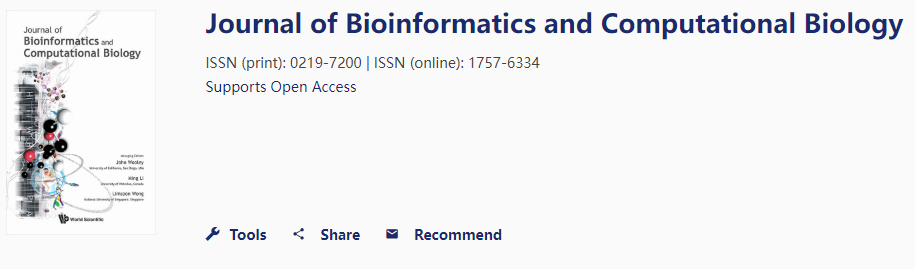
1、 《Journal of Bioinformatics and Computational Biology》
影响因子:0.8
中科院分区:4 区(生物学)
接受率:接受率较高,初次决定3-7天,审稿周期2个月
期刊评价:无版面费,适合预算有限的研究者,虽然审稿快,但是年发文量少
收稿方向:基因组学、蛋白质组学、算法开发等,对数据量要求较低,简单的差异分析 + 功能富集即可投稿
推荐理由:纯生信友好,明确接收纯生物信息学、计算生物学研究,无需实验验证,适合基于公共数据库(如 TCGA、GEO)的分析,但需注意逻辑清晰,避免 “为分析而分析”
往期文章参考:
1)Identification of a seven autophagy-related gene pairs signature for the diagnosis of colorectal cancer using the RankComp algorithm
2)Evaluating network-based missing protein prediction using p-values, Bayes Factors, and probabilities
3)Testing and improving the performance of protein thermostability predictors for the engineering of cellulases
4)NuKit: A deep learning platform for fast nucleus segmentation of histopathological images
5)A model-based clustering algorithm with covariates adjustment and its application to lung cancer stratification
2、《Oncology Letters》
影响因子:2.1
中科院分区:4 区(肿瘤学)
接受率:接受率较高,初次决定7天,返修后接受率高达70%
期刊评价:无版面费,适合肿瘤领域新手,毕业 、职称刚需
收稿方向:肿瘤方向,对基于 TCGA、GEO 的预后模型、免疫微环境分析
推荐理由:肿瘤生信 “保底刊”,但是2023 年曾因自引率略高被预警
往期文章参考:
1)Clinicopathological characterization of cervical squamous cell carcinoma with PIK3CA hotspot mutation: A single‑institution study
2)Development and validation of a prognostic nomogram incorporating preoperative NLR, CEA and CA19‑9 for overall survival in colorectal cancer
3)Immune checkpoint inhibitors for invasive mucinous adenocarcinoma: A case series
4)Locally advanced breast cancer in an elderly male with end‑stage renal disease: A case report
5)Survival prediction in stage II/III rectal cancer: Role of immune‑inflammatory biomarkers post neoadjuvant chemoradiotherapy
3、《World Neurosurgery》
影响因子:2
中科院分区:4 区(医学外科、临床神经病学)
接受率:接受率较高,初次决定5-7天,
期刊评价:适合神经医学背景、需快速产出的研究者,返修后接受率高达80%,适合毕业 、职称加急
收稿方向:神经外科、神经肿瘤,对胶质瘤、脑膜瘤等方向的生信分析,如 TCGA 数据挖掘、预后模型构建
推荐理由:肿瘤生信 “保底刊”,无版面费,年发文量1200+,国人占比35%,对数据量要求宽松
往期文章参考:
1)Carl Wernicke of the Wernicke Area: A Historical Review
2)Bridging Minds and Machines: The Recent Advances of Brain-Computer Interfaces in Neurological and Neurosurgical Applications
3)The Role of Neuropsychology in Traumatic Brain Injury: Comprehensive Literature Review
4)Redefining the Classification for Bertolotti Syndrome: Anatomical Findings in Lumbosacral Transitional Vertebrae Guide Treatment Selection
5)The Evolution of Ventriculoperitoneal Shunt Valves and Why They Fail
审稿高效 录用率高的SCI、SSCI期刊推荐
热门文章阅读排行榜
- 中科院二区三区的物理类sci期刊有哪些
2026-08-22浏览量:491
- Biochemical pharmacology审稿周期长不长
2026-08-21浏览量:344
- MDPI旗下有没有中科院一区期刊
2026-08-21浏览量:548
- 投稿论文系统显示Review in progress是什么意思
2026-08-21浏览量:555
- 通信工程哪些SCI期刊审稿快录取率高
2026-08-20浏览量:794
- Nature Cell Biology初审多久
2026-08-20浏览量:658
- 中科院SCI物理二区期刊有哪些
2026-08-20浏览量:321
- sci审稿人让加实验自己不具备实验条件怎么办
2026-08-19浏览量:637
- electric power systems research论文返修能不能申请延长时间
2026-08-19浏览量:444
- 爱思唯尔Transfer Pending状态如何确定拒稿
2026-08-19浏览量:483